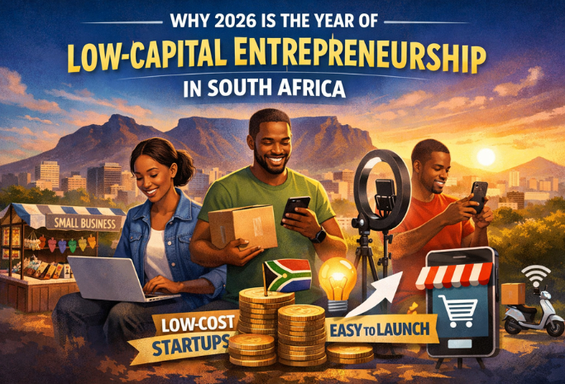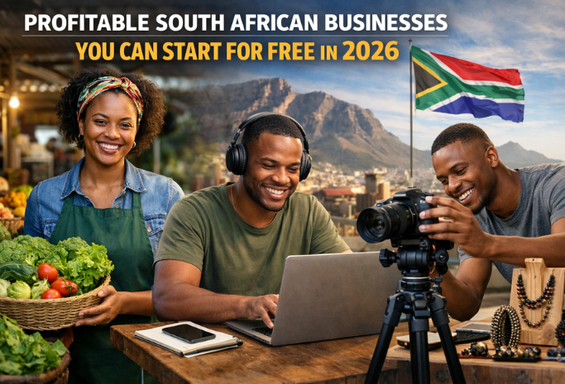
The South African entrepreneurial landscape is shifting. Gone are the days when you needed a massive bank loan or angel investment to launch a startup. In 2026, the barrier to entry has never been lower. With high smartphone penetration and a booming “gig economy,” the most valuable currency you have isn’t the Rand—it’s your time and skills.
This guide explores high-demand, zero-capital business ideas that you can launch today using little more than a smartphone and an internet connection.
1. The “Kasi Economy” & Service Hustles
Best for: Entrepreneurs who prefer hands-on work and face-to-face interaction.
Stop guessing. Start building.
We've built a free Business Idea Generator Tool that walks you through this exact framework and generates a professional Validation Report.
Access the Free ToolSouth Africa’s township economy is estimated to be worth billions. The secret here is convenience. People are busy, and they are willing to pay you to save their time.
Queuing and Errand Runner Services
South Africans spend hours in queues at Home Affairs, traffic departments, and clinics.
-
The Business: Offer a “stand-in” service. You wait in the queue, and the client swaps with you when you reach the front. You can also run errands like collecting medication or groceries for the elderly.
-
Startup Cost: R0.
-
Growth Tip: Use WhatsApp Status to advertise to your immediate community.
Mobile Sneaker & Laundry Cleaning
Sneaker culture in SA is huge, but keeping expensive kicks clean is a hassle.
-
The Business: diverse offering from standard laundry to specialised deep-cleaning for sneakers.
-
Startup Cost: Use the cleaning supplies you already have at home. Reinvest your first profit into premium cleaning kits.
-
Key Resource: Learn professional cleaning techniques on YouTube for free.
Residential Waste Management & Recycling
Municipal services can be inconsistent.
-
The Business: Offer to separate and transport recyclables (glass, paper, plastic) for households to the local depot. Many depots pay by weight, meaning you get paid by the homeowner and the depot.
-
Sustainability: This aligns with global 2026 green energy trends.
2. The Digital Frontier: Selling Skills, Not Products
Best for: Tech-savvy individuals with a laptop or smartphone.
Free Tools Mentioned
Access our interactive calculators to simulate your specific business numbers.
Unlock All Tools FreeIf you have a skill, you have a business. The global freelance market is accessible to any South African with a reliable connection.
Virtual Assistant (VA) for SMEs
Small business owners are overwhelmed with admin.
-
The Business: Manage emails, schedule appointments, and handle data entry for busy professionals.
-
Why 2026? Remote work is now the standard. A VA in Polokwane can easily work for a client in Cape Town or London.
-
Tools: Use free versions of Google Workspace and Trello.
AI Prompt Engineer & Content Editor
With the explosion of AI, businesses are churning out content but often lack the “human touch.”
-
The Business: Offer to edit, fact-check, and “humanise” AI-generated blog posts or marketing copy. You don’t need to be a writer; you just need to know how to polish text.
-
Platform: List your services on platforms like Upwork or local Facebook business groups.
Online Tutoring (Local Languages)
There is a massive demand for learning local South African languages (IsiZulu, Afrikaans, Xhosa) from expatriates and international learners.
-
The Business: Offer conversational lessons via Zoom or WhatsApp video calls.
-
Startup Cost: R0.
-
Resource: Advertise your services on Superprof South Africa.
3. The “Middleman” Model
Best for: Good communicators and sales-oriented people.
You don’t need to own the product to sell it.
Drop-Servicing
This is like dropshipping, but for services.
-
The Business: Find a client who needs a logo (e.g., for R1000). Find a freelancer on Fiverr who will do it for R300. You manage the project and keep the R700 profit.
-
Key Skill: Project management and quality control.
Property Scouting
Real estate agents are always looking for stock.
-
The Business: Look for “To Let” or “For Sale” signs in your area, or properties that look vacant. Contact local estate agents and offer to refer the lead for a commission if they sign the client.
-
Regulation: Ensure you act strictly as a “spotter” (marketing lead generator) to comply with the Property Practitioners Regulatory Authority (PPRA) rules regarding non-agent activities.
4 Steps to Launch Without Funding
Step 1: Validate with “The Mom Test”
Don’t register a company yet. Ask potential customers if they would pay for your service. If 3 people say “yes” and pay a deposit, you have a business.
Step 2: Free Digital Marketing
-
Google Business Profile: Essential for local SEO. Register your business on Google so people find you when searching “near me.”
-
Social Media: TikTok and Instagram Reels are free and offer the highest organic reach in 2026.
Step 3: Formalise (Later)
Once you are making money, you must comply with South African law.
-
Registration: Register your company with the CIPC (Companies and Intellectual Property Commission). It costs R175, but only do this after you have made your first sale.
-
Tax: Register for eFiling with SARS (South African Revenue Service). Turnover tax is very low for micro-businesses.
Step 4: Free Upskilling
Never stop learning. Use these free resources:
-
Google Digital Skills for Africa: Free certification in digital marketing.
-
SEDA (Small Enterprise Development Agency): Access free business templates and mentorship.
In 2026, the only barrier to entry is action. Whether you are running errands in Soweto or managing emails from a farm in the Karoo, the digital economy has levelled the playing field. Start small, start free, and start today.
Need Startup Capital?
If your business is already trading, check your eligibility for up to R5M in unsecured funding.
Check Eligibility