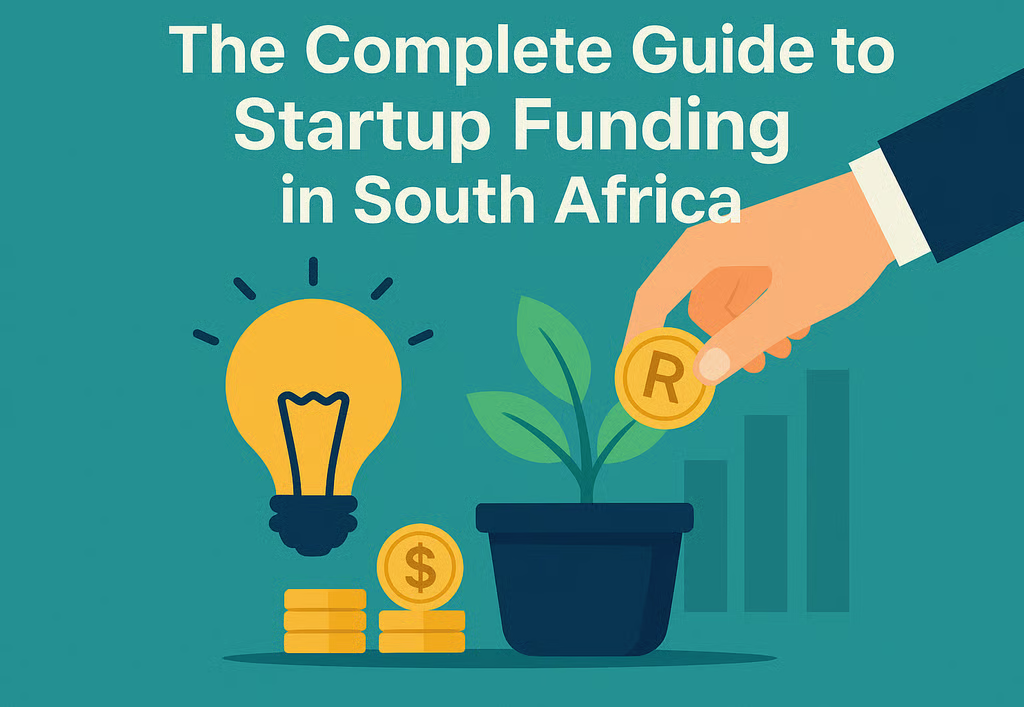
Launching a startup in South Africa takes more than just a great idea—it takes funding. Whether you’re bootstrapping your way to profitability or looking for your first major investment, understanding the landscape of business finance is key. In this guide, we unpack the most relevant funding options for South African startups, offer practical advice, and highlight the common pitfalls to avoid.
1. Bootstrapping and Self-Funding
“This is the most common starting point for South African entrepreneurs. It involves using personal savings, income from side hustles, or reinvesting early revenue.”
Best For: Startups in the idea or early operational phase with minimal overheads.
Stop guessing. Start building.
We've built a free Business Idea Generator Tool that walks you through this exact framework and generates a professional Validation Report.
Access the Free ToolPros:
-
Full control over your business
-
No loan interest or equity dilution
Cons:
-
Slower growth
-
High personal financial risk
Tips:
-
Set up a lean operating model
-
Build a buffer for emergencies
2. Government Grants and Incentives
Government-backed funding is available for specific groups and industries. These grants do not require repayment but come with strict criteria.
Popular Grant Sources:
-
NYDA (Youth-owned businesses)
-
SEFA (Small enterprise support)
-
BIS (Black industrialists)
-
TIA (Tech and innovation-driven startups)
Pros:
-
No repayment required
-
Encourages economic development
Cons:
-
Long application processes
-
Specific eligibility criteria
Tips:
-
Align your business with national priorities like job creation or innovation
-
Prepare complete, compliant applications
3. Business Loans
Business loans offer capital in exchange for repayment with interest. Traditional banks and alternative funders have different requirements.
Types:
-
Bank loans (require strong financial history)
-
Alternative lenders (flexible repayment terms)
-
Personal loans (used when business credit is weak)
Best For:
-
Businesses with strong credit
-
Entrepreneurs needing capital without giving up equity
Pros:
-
Retain full ownership
-
Predictable repayment structures
Cons:
-
May require collateral or surety
-
Interest payments can strain cash flow
Tips:
-
Apply before you urgently need funds
-
Use forecasting to plan for repayments
4. Angel Investment
Angel investors are often experienced entrepreneurs or professionals who invest their own money in early-stage startups in exchange for equity.
Best For: Founders with a strong vision and early traction
Pros:
-
Access to mentorship and networks
-
Fewer formalities than VCs
Cons:
-
May require significant equity
-
Can be difficult to find the right investor match
Tips:
-
Pitch clearly and confidently
-
Use a SAFE agreement to simplify terms
5. Venture Capital
Venture capitalists fund high-growth startups in exchange for equity, with the aim of exiting profitably within 5–7 years.
Free Tools Mentioned
Access our interactive calculators to simulate your specific business numbers.
Unlock All Tools FreeBest For: Startups with scalable models and large addressable markets
Pros:
-
Large funding amounts
-
Credibility and support from experienced investors
Cons:
-
High pressure for rapid growth
-
Potential loss of control in decision-making
Tips:
-
Prepare a detailed pitch deck
-
Be ready to show how you’ll achieve a 10x return
Common Mistakes to Avoid
-
Overvaluing your startup: Unrealistic numbers deter investors
-
Applying without a plan: Know exactly how funds will be used
-
Ignoring compliance: Ensure you meet tax, regulatory, and BEE requirements
Startup funding in South Africa is diverse and full of opportunity. By understanding your options and preparing strategically, you can secure the right funding to launch, grow, and thrive. Whether you’re applying for a grant, pitching to an investor, or bootstrapping your way up, remember that the right funding choice should align with your business goals.
Need Startup Capital?
If your business is already trading, check your eligibility for up to R5M in unsecured funding.
Check Eligibility